If you’re visiting Gullfoss by car, there are two parking lots: the Upper lot, the main one, beside the visitor center, and the Lower lot, the alternative — linked by footpaths.
For the shortest, paved walk to the viewpoints and facilities, head to the Upper lot. Use the Lower one when the upper area is congested. Always check on-site signage for any seasonal fees or time limits, and budget 10–15 minutes from the lot to the railings — more in peak summer and winter conditions.
Upper car park
The upper car park is the default for most visitors. It’s adjacent to the café, shop, and restrooms, with paved, gently graded paths to the main viewing platforms — the most efficient choice if you need quick facilities, are traveling with children, or want the most direct route to the viewpoints.
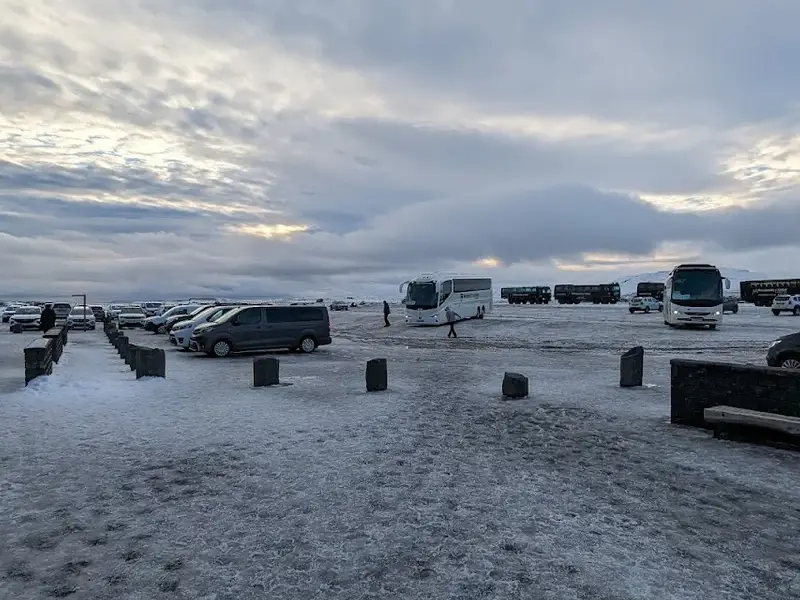
- You want the shortest, paved walk to the overlooks
- You plan a brief stop (30–45 minutes)
- You need restrooms or a warm indoor break before or after viewing
Lower car park
The lower lot is a useful pressure valve on busy days. Footpaths connect up to the upper area and down toward the river level. When the upper car park looks full, starting here can reduce circling time and add a calmer approach to the views.
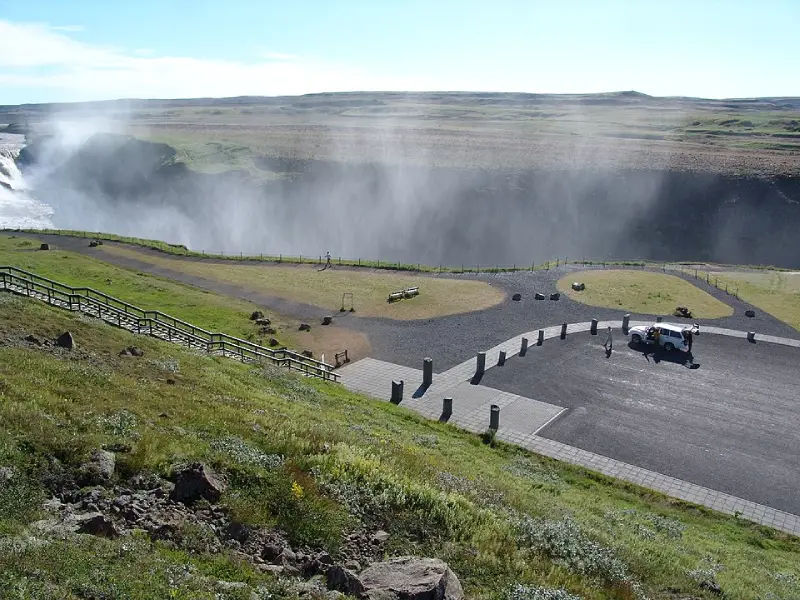
- The upper lot is busy and you want faster turnover
- You prefer a quieter start and don’t mind a short uphill walk
- You plan to check the lower path if it’s open (see seasonal notes below)
Arrival timing and flow
Peak summer (Jun–Aug)
Late morning to mid-afternoon is busiest. Go early morning or late afternoon for more space, and add 10–15 minutes for parking and restroom lines during coach arrivals.
Shoulder (May, Sep–Oct)
Lighter crowds than high summer, but weather shifts can be abrupt — keep a buffer so a passing shower doesn’t compress your viewing time.
Winter (Nov–Mar)
Ice, wind, and limited daylight, with slick surfaces near vehicles. The lower path is often closed — confirm at the visitor center. Add 5–10 minutes for careful walking.
Fees, signage, and on-site rules
Policies may change seasonally — check posted signs on arrival. If payment is required, it’s typically via machine or QR/online, with cards widely accepted.
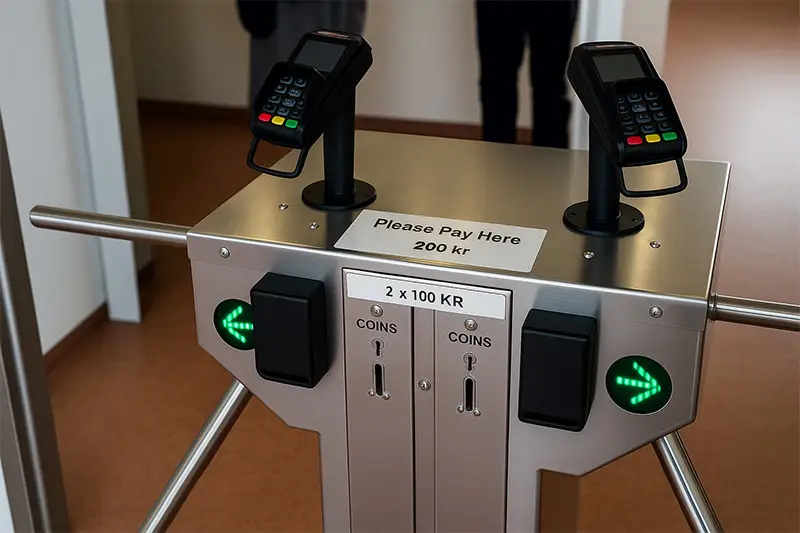
Respect any signed time limits to keep spaces turning over and avoid penalties. The car parks are intended for day use; follow on-site instructions and local regulations if you plan to park or stay overnight elsewhere. Keep entry/exit lanes clear, use marked bays only, and avoid verges or turning circles to maintain safe flow for pedestrians, coaches, and emergency access.
Vehicles & special cases
Coaches and minibuses must use designated bays and follow marshal directions when present. RVs and campervans should park only in marked spaces and confirm local overnight rules in advance if staying elsewhere.
Motorcycles and bicycles should use signed areas where available and keep pedestrian routes and approaches to the railings clear. For drop-off or pick-up, use marked zones only — never stop in live lanes or block crossings.
Safety essentials in the car parks
Conditions on the plateau can shift quickly, and both drivers and pedestrians need to stay alert. A few essentials to keep in mind:
Secure doors in wind
Strong gusts are common on the open plateau. Open car doors slowly and keep a firm grip — sudden gusts can take children by surprise.
Drive slowly and yield
Pedestrians move between vehicles, footpaths, and viewpoints. Reduce speed near path entrances, and give coaches extra room to maneuver.
Dress for short, exposed walks
Even the walk from your vehicle can feel harsh. Wear traction footwear year-round, add a waterproof layer, and pack microspikes in winter.
Keep bays clear and tidy
Don’t leave valuables visible. Use the bins provided — strong winds can easily scatter loose items left in or near your car.